
· 5 min read
Don’t Take the Bait: How AI Is Changing Phishing Attacks
As industry leaders such as Google and Microsoft embrace a foundation built on AI, cybercriminals are evolving just as quickly.
By Microsec IT
As industry leaders such as Google and Microsoft embrace a foundation built on AI, cybercriminals are evolving just as quickly.
Phishing attacks have developed into highly convincing, automated campaigns that deploy at scale. With AI enabling real-time impersonation and precision targeting, Vancouver businesses face a growing threat - one that requires stronger awareness, smarter tools, and a proactive approach to security.
What is Phishing?
Many believe that Phishing is simply a fake email that you might receive in your inbox, but it’s truly a form of social engineering, with the goal of tricking a victim into taking some sort of action or providing sensitive data.
Many attacks rely on fake websites, embedded macros, and interactive elements that trick users into running commands, installing software, or entering sensitive information. With AI, what once required time, skill, and manual effort to build can now be automated and scaled in seconds. This has led to a major increase in threat volume worldwide.
Phishing takes many different forms, including the classic Email threats:
-
Spear Phishing
Highly targeted attacks aimed at specific individuals or roles within an organization. These messages are personalized, often referencing real names, job titles, or recent business activity. -
Whaling
A specialized form of spear phishing that targets executives or senior leadership (e.g., CEOs, CFOs). These attacks often involve high-stakes requests like wire transfers or sensitive data access. -
Business Email Compromise (BEC)
Attackers impersonate trusted contacts - such as vendors, partners, or coworkers - to trick employees into sending money or sharing confidential information. -
Clone Phishing
A legitimate email is copied and resent with a malicious attachment or link, making it appear identical to a previous trusted message. -
Attachment-Based Attacks
PDFs or documents that contain links to phishing pages or prompt users to enable macros, which can allow attackers to run commands remotely.
Modern Phishing, however, no longer relies on your email:
-
Smishing (SMS Phishing)
Phishing delivered via text message, often posing as delivery services, banks, or service providers to create urgency and prompt clicks. -
Vishing (Voice Phishing)
Phone-based scams where attackers impersonate IT support, banks, or executives to manipulate victims into giving up credentials or approving actions. -
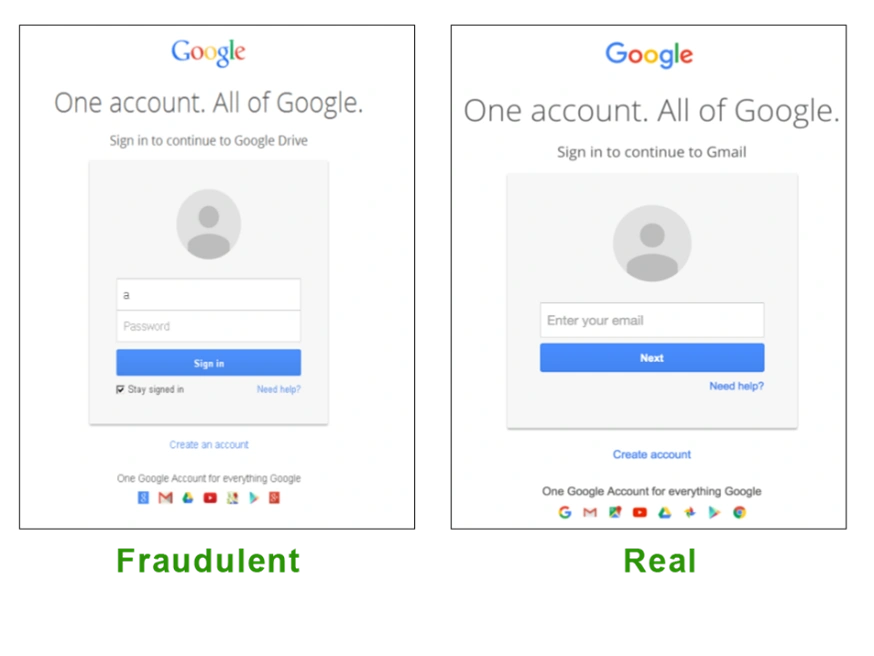
Fake Login Pages
Websites that closely mimic Microsoft 365, Google, or banking portals, designed to steal usernames and passwords. (Pictured below)
-
Fake CAPTCHA Prompts
“I’m not a robot” verification screens that instruct users to click, copy/paste commands, or download files, often used to deliver malware. -
Spoofed Websites (Lookalike Domains)
URLs that appear legitimate at first glance (e.g., micr0soft-login.com), used to trick users into trusting the site. -
Malicious Pop-Ups and Redirects
Messages claiming your session has expired or your account is at risk, pushing you to log in a second time via a fake page.
Who is Being Targeted?
No organization is immune, and small to mid-sized businesses in Vancouver are increasingly prime targets. Attackers know that small businesses do not often invest in their IT security, and will focus attacks on finance teams, property managers, executives, and employees with access to sensitive information, systems, or data. In a lot of small businesses, employees wear multiple hats, widening the attack surface and likelihood of a successful phishing campaign.
However, with AI-driven automation, attacks now cast a wider net, targeting entire organizations simultaneously. Even a single compromised account can open the door to larger breaches, making every employee a potential entry point.
How Can I Protect Myself?
Mitigating Phishing requires a proactive, layered approach to cybersecurity. While technology plays a major role in security posture, your employees are often the first line of defense.
By combining user awareness with modern security tools and clear processes, you can significantly reduce the risk of a successful attack. We recommend:
-
Verify unexpected requests for payments, credentials, or sensitive information, especially if they create urgency
-
Check sender email addresses and hover over links before clicking
-
Enable multi-factor authentication (MFA) across all business-critical systems
-
Use advanced email filtering and endpoint protection tools
-
Provide regular cybersecurity awareness training for employees
-
Keep systems, software, and security patches up to date
-
Report suspicious emails immediately instead of interacting with them
How Microsec IT Protects Your Team
At Microsec IT, we take a proactive, security-first approach to protecting your business from modern threats. Our layered security stack combines advanced tools with real-world expertise to detect, prevent, and respond to attacks before they impact your operations.
From endpoint to inbox to mobile device, we ensure your entire environment is monitored, secured, and continuously improving.
- Endpoint Detection & Response (EDR): Real-time monitoring and automated threat remediation across all workstations and servers
- Advanced Email Protection: Filtering, link protection, and impersonation detection to stop phishing before it reaches your team
- Mobile Device Protection: Security for smartphones and tablets, including malware defense and spam filtering
- 24/7 Threat Monitoring: Continuous oversight to detect and respond to suspicious activity immediately
- Vulnerability Management & Patching: Identifying and resolving security gaps before attackers can exploit them
- Security Awareness & Best Practices: Helping your team stay informed and prepared against evolving threats
Phishing attacks are only getting more advanced and more common. At Microsec, our mission is to make Enterprise-grade IT and Security affordable and available to all of our clients, whether at home or in the office.
If you’re unsure how well your business is protected, now is the time to find out. Email us today at info@microsecit.com for a no-obligation security assessment and consultation from our team!